The History of Audemars Piguet: Innovation, Independence, and the Royal Oak
 ChronoHedge Research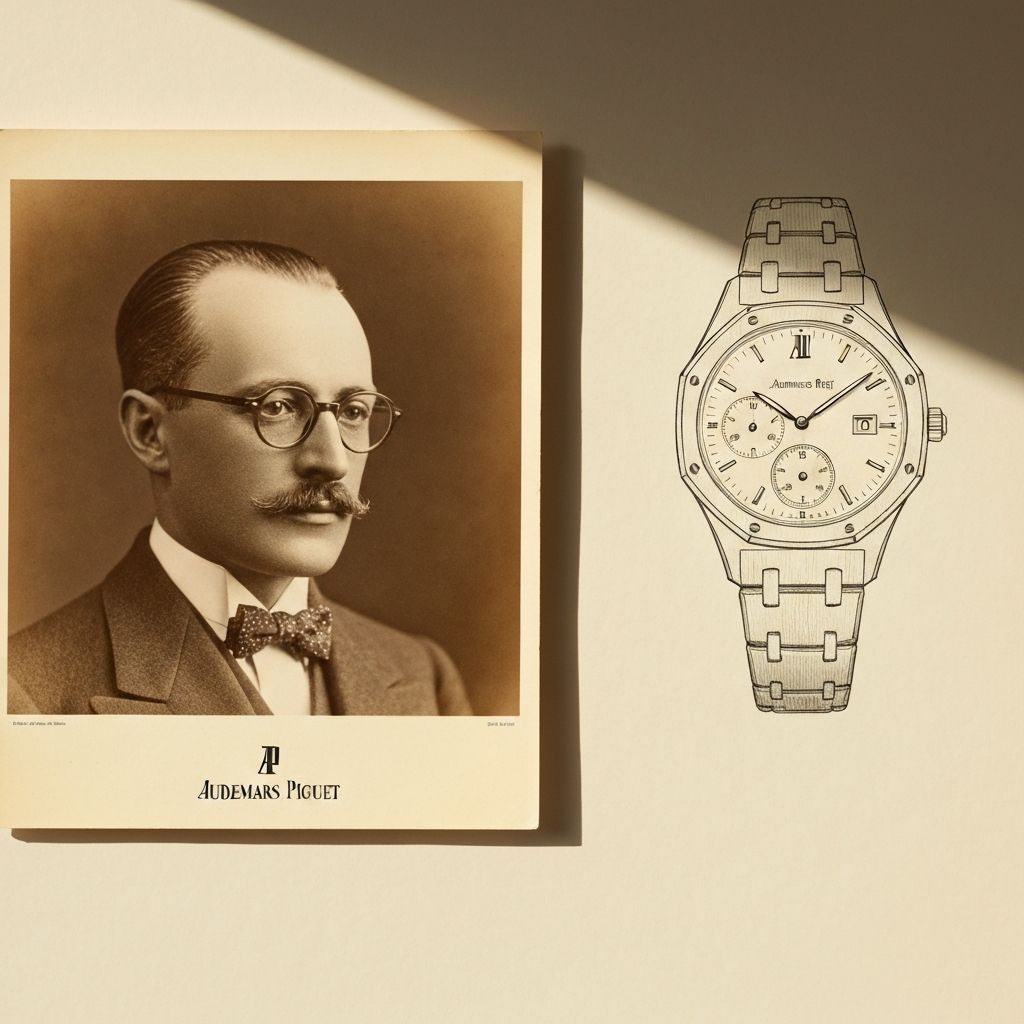
Audemars Piguet is one of the most influential watchmakers in the world, but its influence does not come from size, mass production, or aggressive marketing. It comes from identity. It comes from innovation. It comes from the quiet confidence of a family owned company that has shaped modern watchmaking more profoundly than almost any brand in the industry.
Where Rolex built global prestige through reliability and Patek Philippe built generational legacy through classic refinement, Audemars Piguet carved its path through creativity and boldness. Its history is a story of artisans who were not afraid to take risks, to rethink the rules, and to push mechanical watchmaking into new territory.
This is the story of a company that introduced one of the most important watches ever made. A company that survived the most disruptive period in modern horology. A company that redefined what luxury sports watches could be. And a company that still operates independently, guided by the descendants of its original founders.
Audemars Piguet is not just a manufacturer. It is a philosophy. The more you understand its history, the clearer that philosophy becomes.
1. The Origin Story: Two Watchmakers From the Vallée de Joux
The history of Audemars Piguet begins in 1875 in the Vallée de Joux, Switzerland, a region known as the birthplace of some of the most skilled watchmakers in the world. This valley, surrounded by mountains and extreme winters, created a culture of precision craftsmanship. Families passed down watchmaking techniques generation after generation. Knowledge stayed local, deepening with time.
Two young men from the valley, Jules Louis Audemars and Edward Auguste Piguet, shared a passion for advanced mechanical movements. Audemars specialized in complex calibers and final regulation. Piguet specialized in finishing and setting the movement into a fully realized watch. Their skills complemented each other perfectly.
They formed Audemars Piguet and Cie in 1881. From the beginning, the founders chose a very specific focus. They specialized in complicated watches. They wanted to create timepieces that challenged the limits of mechanical engineering. This set them apart immediately. Most watchmakers of the time focused on simpler movements for broader markets. Audemars Piguet aimed higher.
The DNA of the company was established early. Complication. Innovation. Artistry. Independence.
2. Early Masterpieces and Technical Achievements
Audemars Piguet did not take decades to begin producing groundbreaking work. From the late nineteenth century into the early twentieth century, the company built some of the most advanced mechanical watches in Switzerland.
Minute repeaters
Audemars Piguet quickly gained recognition for its mastery of minute repeating mechanisms. These watches chime the time through a series of gongs and hammers, requiring immense skill to produce.
Grande complications
Audemars Piguet created watches that combined multiple complications in a single movement. Calendar functions, chronographs, chiming functions, and astronomical displays were integrated with remarkable precision.
Chronographs
The company became known for chronographs that were not only precise but also beautifully finished and elegantly designed.
Pocket watches for royalty and elite clientele
These early pieces caught the attention of aristocrats, industrial magnates, and collectors across Europe. The brand established a reputation for exclusivity and technical mastery.
By the early 1900s, Audemars Piguet had already secured its place among the elite watchmakers of the world.
3. The Rise of Complications: AP's Identity Takes Shape
Throughout the twentieth century, Audemars Piguet expanded its expertise in high complication movements. Instead of shifting toward mass production during periods of industrialization, the brand doubled down on artistry.
Audemars Piguet became synonymous with horological excellence in several categories.
Perpetual calendars
AP mastered the perpetual calendar mechanism early, producing some of the thinnest and most elegant versions ever made.
Minute repeaters and chiming watches
The company maintained its reputation as one of the premier creators of chiming watches. Each piece was hand tuned and constructed by master artisans.
Skeletonization
Audemars Piguet pioneered openworked designs that revealed the beauty of the mechanical movement. Skeletonization became part of the brand's visual signature.
Throughout this period, the company remained independent and family owned, allowing it to preserve its long term perspective.
Yet even with all these achievements, the defining moment of Audemars Piguet's history had not yet occurred. That moment came in 1972.
4. The Crisis That Changed Everything: The Quartz Revolution
The 1970s brought one of the most disruptive periods in watchmaking history. Quartz technology, introduced by Japanese manufacturers, created watches that were far more accurate and far less expensive than mechanical watches.
The Swiss industry collapsed. Hundreds of brands disappeared. Many legendary companies were forced to close their doors or merge with larger groups. Traditional mechanical watchmaking seemed outdated.
Audemars Piguet, still independent and focused on high complications, faced a critical choice. Adapt or disappear.
The company decided to innovate instead of imitate. It made one bold decision that changed not only the brand but the entire luxury watch industry.
5. The Royal Oak: A Revolution in Steel
In 1972, Audemars Piguet unveiled the Royal Oak, designed by Gerald Genta. The watch was unlike anything the industry had seen.
- It had an octagonal bezel inspired by a ship's porthole.
- It had exposed screws.
- It had an integrated bracelet with sharp, angular lines.
- It had a steel case priced at levels usually reserved for gold watches.
- It had a bold, industrial aesthetic in a world dominated by delicate dress watches.
The watch was a shock to the market. Many critics dismissed it. Collectors were confused. Retailers questioned whether it would sell.
But Audemars Piguet understood something that others did not. Luxury was changing. Style was changing. Prestige was changing. The brand took a risk that ultimately reshaped the entire industry.
The Royal Oak legitimized the idea of the luxury steel sports watch. It introduced a category that would go on to define modern collecting. It rescued the company from the quartz crisis. And it became one of the most iconic watches ever made.
Today, the Royal Oak is one of the most coveted and influential watches in the world.
6. Why the Royal Oak Succeeded: Vision, Timing, and Identity
The Royal Oak succeeded for several reasons.
It challenged the definition of luxury
The idea of a high priced steel watch was revolutionary. It made collectors rethink what luxury meant.
It merged art and engineering
The finishing on the case and bracelet was extraordinary. Every edge, bevel, and surface was polished and brushed to perfection.
It captured the spirit of modernity
The design was futuristic without being trendy. It was confident and architectural.
It appealed to new generations
The Royal Oak attracted younger buyers who wanted something sportier and more expressive.
It became a cultural symbol
Over time, the Royal Oak became a staple among artists, athletes, entrepreneurs, and collectors who valued taste and individuality.
The watch did not merely succeed. It transformed the brand. It set the stage for Audemars Piguet's next critical innovations.
7. The Royal Oak Offshore: A Larger, Bolder Identity
In 1993, Audemars Piguet introduced the Royal Oak Offshore, a larger and more aggressive interpretation of the original design. It was polarizing at first. Critics thought it was oversized and too bold.
But once again, AP understood cultural momentum before the rest of the industry. Watches were getting bigger. Buyers wanted something that felt strong, expressive, sporty, and modern.
The Offshore quickly found an audience. Athletes, celebrities, and collectors embraced it. The watch carved out a new space in the market for oversized luxury sports watches.
The Royal Oak Offshore became a cultural icon in its own right. It helped Audemars Piguet dominate the luxury sports category and strengthened the brand's connection to contemporary style.
8. Continuing Innovation: Openworking, Materials, and Complications
Audemars Piguet's modern era is defined by creative experimentation and technical mastery. The company consistently pushes boundaries in both aesthetics and engineering.
Openworked Royal Oaks
AP creates some of the most beautiful openworked movements in the world. These pieces showcase the mechanical heart of the watch with remarkable clarity and artistry.
New materials
The brand pioneered the use of forged carbon, ceramic, titanium, and advanced alloys in high luxury watches. These materials expanded the visual and tactile possibilities of watchmaking.
Advanced complications
Audemars Piguet continues to produce minute repeaters, perpetual calendars, tourbillons, chronographs, and grand complications. These pieces represent the highest level of craftsmanship.
The Code 11.59 collection
Introduced in 2019, Code 11.59 demonstrated AP's willingness to create an entirely new design language. While controversial at launch, the collection evolved into an important modern pillar for the brand.
Audemars Piguet remains one of the few watchmakers that balances heritage and innovation with equal confidence.
9. Independence as a Strategic Advantage
Audemars Piguet is one of the last major watch manufacturers that remains family owned and independent. This independence is a central part of the company's identity.
It allows AP to:
- Control production
- Maintain long term strategy
- Avoid dilution
- Focus on quality over quantity
- Preserve brand heritage
- Innovate freely
This independence also allows AP to respond quickly to cultural trends. The company does not need to answer to large corporate shareholders. It can take risks. It can experiment. It can maintain authenticity.
This strategic autonomy is one of the reasons the brand remains influential and respected.
10. Audemars Piguet and Cultural Influence
AP is deeply embedded in modern culture. It has a presence in sports, music, art, fashion, and entrepreneurship. This visibility helps the brand attract new generations of collectors.
Key cultural touchpoints
- Professional athletes
- Hip hop artists
- Entrepreneurs in tech and finance
- Art collectors
- Fashion designers
The Royal Oak and the Royal Oak Offshore appear frequently in music videos, interviews, magazine covers, and high profile events.
This cultural relevance creates organic demand. AP does not rely on mass advertising. It relies on identity, taste, and community.
11. Why Audemars Piguet Watches Hold Value
Audemars Piguet has become one of the strongest performers in the luxury watch market for several reasons.
Scarcity
AP limits production to preserve quality and exclusivity.
Iconic designs
The Royal Oak is one of the most influential designs in the history of watchmaking.
Strong secondary market demand
Collectors, investors, and enthusiasts create consistent demand.
Cultural visibility
The brand has deep cultural resonance that spans generations.
Craftsmanship
Each watch is a highly finished work of art.
Independence
Being family owned allows AP to maintain strict standards and control its destiny.
These factors create long term value stability and appreciation.
12. The Role of Audemars Piguet in the Modern Watch Market
Today, AP sits in a unique position. It is part of the "Holy Trinity" along with Patek Philippe and Vacheron Constantin, yet it is the most contemporary of the three. AP has mastered the balance of tradition and modern influence.
- The brand dominates the luxury sports category.
- It remains a leader in mechanical complexity.
- It influences fashion and culture.
- It appeals to both seasoned collectors and first time buyers.
Audemars Piguet's role is not simply to preserve tradition. Its role is to shape the future of watchmaking.
13. The Future of AP: Innovation Rooted in Heritage
Audemars Piguet continues to innovate while honoring its historical foundations. The brand invests heavily in research, new materials, movement development, and artisanal training.
Future growth will come from:
- Expanded use of openworked movements
- Refinements to Code 11.59
- Advanced complications
- Sustainable manufacturing practices
- Integration of new alloys and composites
- Controlled production with heightened exclusivity
AP's future is built on the same principles that guided its past. Craftsmanship. Creativity. Identity. Independence.
14. The Final Verdict: The History That Created a Legend
Audemars Piguet's history is a story of bold choices, technical brilliance, and unwavering independence. From its origins in the Vallée de Joux to the creation of the Royal Oak and beyond, AP has consistently pushed watchmaking forward.
- Where other brands focused on conservatism, AP embraced risk.
- Where others feared disruption, AP created new categories.
- Where others followed trends, AP set them.
The company's legacy is built on innovation, courage, and artistic vision. It represents a philosophy of watchmaking that values individuality and creativity as much as precision.
ChronoHedge views Audemars Piguet as one of the strongest tangible assets for investors seeking portable wealth, cultural resonance, and long term value retention. The brand's history explains why. It is not merely a manufacturer. It is a force that transformed luxury watches forever.
Audemars Piguet does not follow the world. It helps the world reimagine luxury.
Its history is proof.